
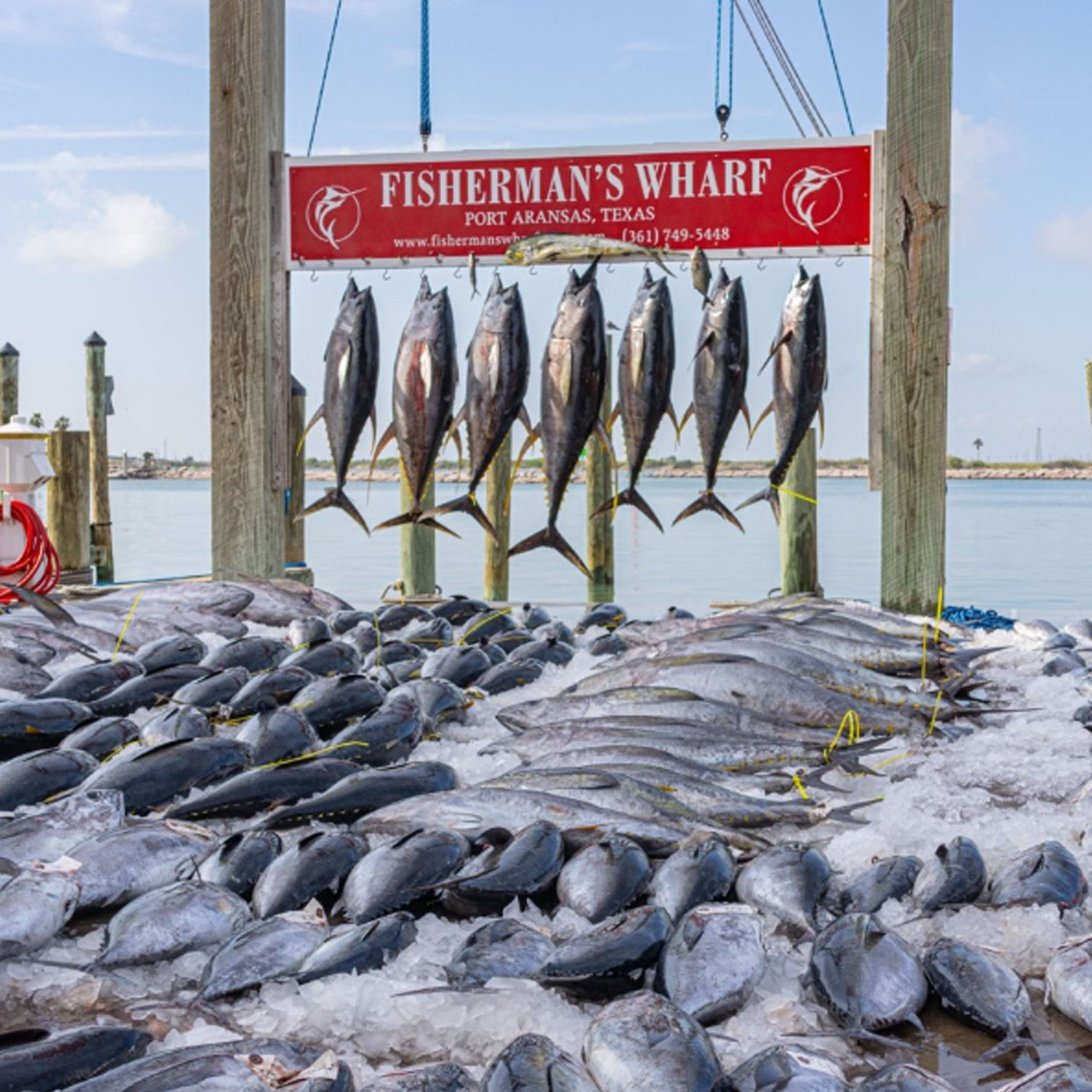
The best time to go tuna fishing in the Gulf, for most anglers, is during the fall and winter months. As summer transitions into cooler weather, changing baitfish patterns, water conditions, and feeding activity can create excellent opportunities to catch tuna. For anglers planning a trip out of Port Aransas, autumn is an ideal time to target yellowfin tuna offshore. If you’ve been waiting for the right moment to chase your first tuna, this is it.
Why Are Fall and Winter Great Months for Tuna Fishing?
At Fisherman’s Wharf, we run our tuna fishing charters from November through March, with fall and winter offering some of the most consistent opportunities to target yellowfin tuna. That window lines up with cooler weather and steady action at the deep-water rigs.
While no two trips are exactly alike, fall is an excellent season to plan a tuna fishing charter in Port Aransas.
Cooler Weather
Fall and winter can bring more comfortable temperatures along the Texas coast, making extended time outdoors more enjoyable. Cooler conditions also create a different atmosphere for anglers heading offshore for a multi-day fishing trip.
A Less Crowded Coastal Experience
Port Aransas attracts visitors throughout the year, especially during the summer vacation season. Fall offers a different atmosphere, with fewer summer vacationers in many parts of the area once school resumes.
For anglers planning a fishing getaway, that can make it easier to enjoy the surrounding coastal community before and after a charter. You can build your trip around an offshore fishing adventure without the same peak-summer vacation crowds.
What Factors Make Tuna More Active in the Fall?
Tuna activity depends on several interconnected factors, including water temperature, currents, prey availability, and the location of productive offshore structures. Understanding these conditions helps explain why autumn can be such a rewarding time to target tuna in the Gulf.
Changing Water Temperatures and Offshore Conditions
Tuna are highly mobile predators that respond to changes in their environment. As water temperatures and currents shift during the fall, schools of tuna may move between feeding areas or change their depth and position around offshore structures.
For Port Aransas anglers, deep-water oil rigs and areas with significant changes in bottom depth are important fishing locations. These offshore areas can attract baitfish and other marine life, creating feeding opportunities for larger predators. However, tuna do not remain around the same rigs every day, so finding productive water is part of the challenge.
Yellowfin tuna often occupy deeper water near offshore rigs, while feeding fish may also move closer to the surface. Experienced captains use current conditions, onboard fish finders and sonar technology, and recent observations to help locate productive fishing areas.
Baitfish Migrations Can Create Feeding Opportunities
Tuna need a steady supply of prey to fuel their powerful swimming and active hunting behavior. During autumn, changing conditions and seasonal movements of baitfish can influence where tuna gather to feed.
Watch for several clues that may indicate nearby feeding fish:
- Diving seabirds: Birds feeding repeatedly in one area may indicate baitfish near the surface and predators below.
- Scattering baitfish: Small fish fleeing across the water can signal that larger predators are hunting nearby.
- Surface disturbances: Tuna may chase prey to the surface, creating splashes or visible feeding activity.
- Promising offshore structures: Deep-water rigs and nearby current edges can concentrate marine life and attract tuna.
Why Is Fall a Good Time to Target Larger Yellowfin Tuna?
Fall is a particularly appealing time for anglers hoping to catch a large yellowfin tuna because productive feeding conditions can bring these powerful fish within reach of offshore fishing charters. Yellowfin are prized for their size, speed, strength, and the challenge they present once hooked.
For anglers hoping to land a trophy yellowfin, working with a captain who understands the local offshore fishing grounds can make a meaningful difference.
What Should You Bring on a Tuna Fishing Trip?
Preparing for an offshore tuna trip means planning for sun, wind, cooler temperatures, and 60 hours on the water.
Use this checklist to prepare:
- Comfortable clothing appropriate for changing offshore weather conditions.
- Sunscreen, polarized sunglasses, and a hat.
- Non-slip footwear suitable for fishing.
- Bedding for two nights offshore.
- Food and drinks for the duration of the trip.
- Your preferred fishing gear. All bait and tackle are provided, but bringing your own equipment is strongly recommended.
- A cooler to store your food, drinks, and catch.
For the complete list and other trip information, check out our tuna fishing basics guide.
Plan Your Fall Tuna Fishing Trip in Port Aransas
Fall is an excellent time to plan a tuna fishing trip in the Gulf. The seasonal change can bring productive feeding opportunities, the chance to target powerful yellowfin and blackfin tuna, and more comfortable temperatures along the Texas coast. Although fishing conditions are never guaranteed, choosing the right season and going with an experienced captain can help you make the most of your time offshore.
Once you bring home your catch, the experience continues in the kitchen. Explore our guide to preparing your tuna and the best ways to cook your catch for ideas on making the most of fresh tuna.
Ready to experience offshore tuna fishing in Port Aransas? We provide expertly guided fishing charters, professional fish cleaning services, and access to the Gulf’s best tuna fishing spots. If you have questions about fall fishing, trip details, or what to pack for the fishing charter, contact Fisherman’s Wharf. Our team is happy to help you book your next offshore adventure.
